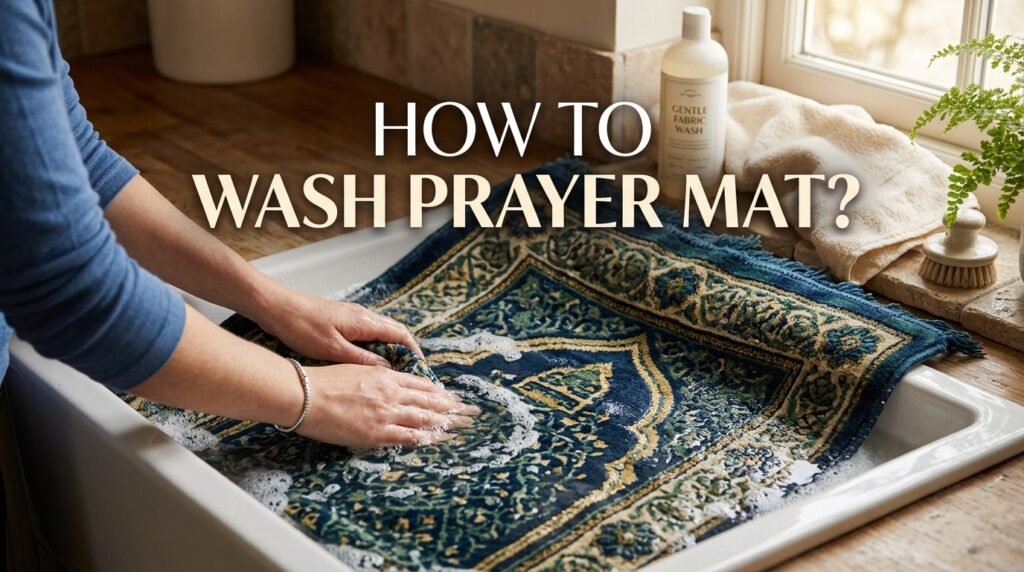
Your forehead touches it five times a day. So why does the janamaz often get less cleaning attention than the rest of your home?
Most people should wash or deep-clean their prayer mat every one to two weeks, with a quick shake or surface wipe after daily use. The exact schedule depends on the fabric, the season, and how often the mat is used. A janamaz sitting on a bedroom floor in Lahore’s dusty summer needs more attention than one used occasionally in a quiet corner.
This article breaks down a practical cleaning schedule, explains why it matters for prayer and hygiene, and shares care tips suited to Pakistani homes.
Why Cleaning Schedule Depends on More Than Just Looks
A prayer mat collects dust, dead skin cells, and sweat, even if it looks clean. Since salah requires a clean space, a mat that hasn’t been washed in months may not meet that standard, even without visible dirt.
Three factors decide how often you should clean:
- Frequency of use – A mat used by one person twice a day needs less frequent washing than a family mat used by five people.
- Fabric type – Memory foam prayer mats, velvet mats, and thin cotton mats each hold dirt and moisture differently.
- Location and climate – Mats kept near open windows or on floors during Lahore, Karachi, or Multan summers pick up more dust and humidity.
Recommended Cleaning Frequency
Daily: Quick Maintenance
You don’t need to wash your janamaz every day, but a few quick habits help a lot.
- Shake it outside or over a balcony to remove loose dust.
- Fold it away from direct sun and moisture when not in use.
- Keep it off bathroom floors or damp areas, especially during wudu.
Weekly: Surface Cleaning
Once a week, give the mat closer attention.
- Vacuum it lightly or brush off embedded dust.
- Spot-clean any visible marks with a damp cloth.
- Air it out on a clothesline or chair for an hour to release trapped moisture.
Every Two to Four Weeks: Deep Clean
This is where most households fall behind. A deeper clean removes what daily dusting can’t.
- Handwash thin cotton or velvet mats with mild detergent.
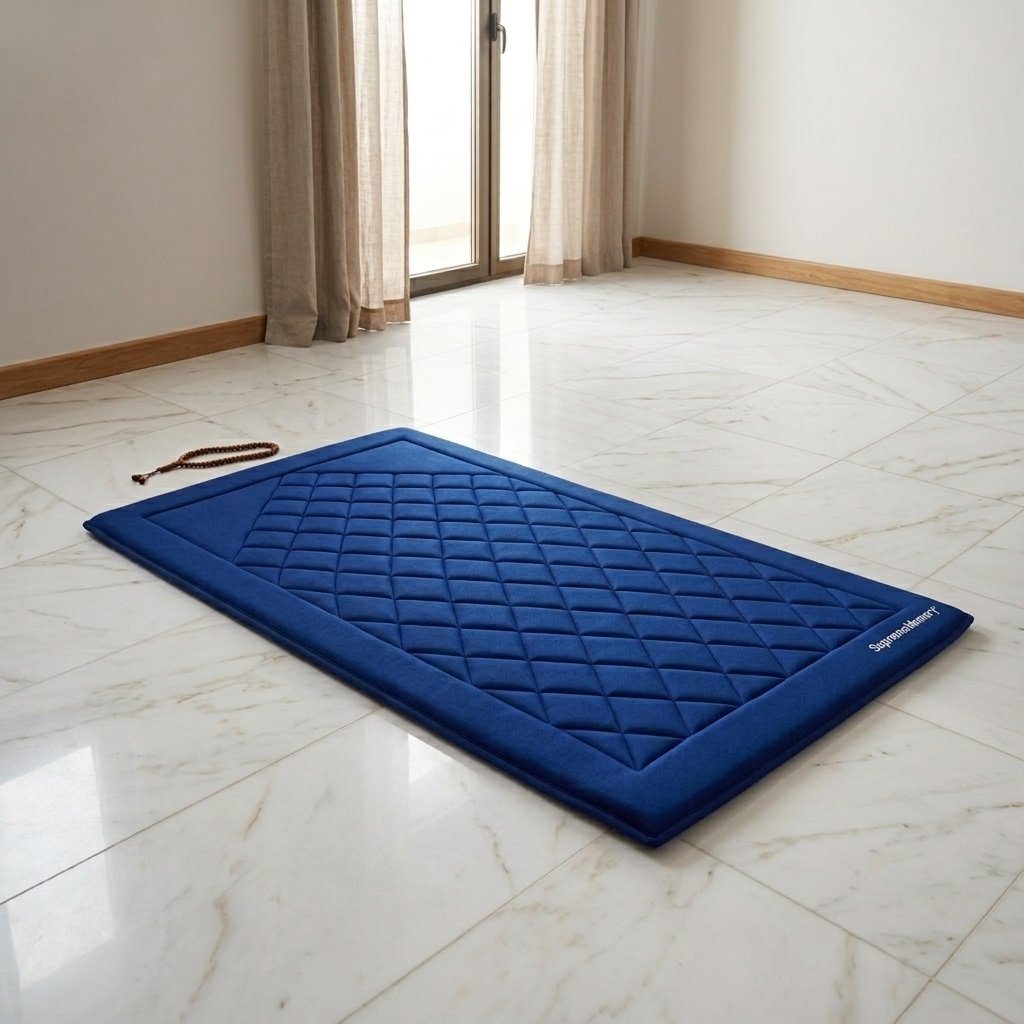
- For memory foam prayer mats, spot-clean the surface only. Foam should never be fully soaked, since trapped water inside the foam can lead to a musty smell.
- Check the manufacturer’s care label if the mat came with one.
Family mats used by children, or mats used during Ramadan when prayer frequency increases, may need this deep clean more often, sometimes weekly.
Special Considerations for Memory Foam Prayer Mats
Memory foam prayer mats, sometimes called jai namaz mats in local markets, have become popular in Pakistani households because the cushioning reduces pressure on the knees and forehead during long prayers or taraweeh in Ramadan. But foam needs different care than a flat cotton mat.
Read More: Memory Foam Prayer Mat vs Traditional Janamaz
What works:
- Wiping the top fabric layer with a barely damp cloth.
- Spot-treating stains immediately before they set into the foam.
- Letting the mat air-dry fully before folding or rolling it away.
What to avoid:
- Machine washing, which can break down the foam structure over time.
- Soaking or pouring water directly on the mat.
- Storing it while still slightly damp, which encourages odor and mildew, especially during Pakistan’s humid monsoon months.
At Diamond Foam, mats are designed with removable or wipeable covers in mind, which makes this kind of regular surface care easier without risking damage to the foam layer underneath.
Signs Your Prayer Mat Needs Cleaning Now
Skip the schedule and clean immediately if you notice:
- A musty or sour smell when you unroll it.
- Visible stains, dust buildup, or discoloration.
- Flattened, hardened patches on foam mats, which can also signal it’s time to check the foam quality itself.
- Anyone in the household has been unwell, since mats can hold onto germs longer than most people expect.
How Climate in Pakistan Affects Your Cleaning Routine
Weather plays a bigger role than most people realize.
| Season | Main Concern | Suggested Action |
| Summer (dust, heat) | Dust accumulation, sweat | Weekly shake-out, biweekly surface clean |
| Monsoon (humidity) | Moisture, mildew smell | Extra air-drying time, avoid damp storage |
| Winter | Less dust, but indoor heater use | Standard biweekly cleaning is usually enough |
Homes near construction sites or main roads in cities like Karachi or Islamabad may need to shake out mats more often because of airborne dust.
Choosing a Mat That’s Easier to Maintain
If cleaning your current janamaz feels like a constant chore, the mat itself might be part of the problem. Thin, low-quality foam tends to absorb odors and flatten quickly, making it harder to keep fresh no matter how often you clean it.
A well-made memory foam prayer mat with a washable or wipeable cover, like those available at Diamond Foam, holds up better through repeated use and cleaning. This means less effort spent scrubbing and more consistency in keeping it fresh for daily prayer.
A clean janamaz isn’t just about appearance. It reflects the care you bring to your prayer space, and a simple weekly-to-biweekly routine keeps it fresh without becoming a burden.
Frequently Asked Questions
How often should a prayer mat be washed?
Most prayer mats should be surface-cleaned weekly and deep-cleaned every two to four weeks. Frequency of use, fabric type, and climate all affect the ideal schedule.
Can memory foam prayer mats be washed in a washing machine?
No. Machine washing can damage the foam structure. Memory foam mats should only be spot-cleaned on the surface and air-dried completely before storage.
Why does my janamaz smell even after cleaning?
A lingering smell usually means the mat wasn’t fully dried before folding, or moisture got trapped inside the foam. Always air-dry mats completely, especially during humid months.
Is it necessary to clean a janamaz for salah to be valid?
Salah requires a clean space, so visible impurities on a mat can affect prayer validity. Regular cleaning also supports general hygiene, even when the mat looks clean to the eye.
How long does a good memory foam prayer mat last with proper care?
With regular surface cleaning and correct drying, a quality memory foam prayer mat can maintain its shape and comfort for a long time, though lifespan varies depending on daily use and storage conditions.