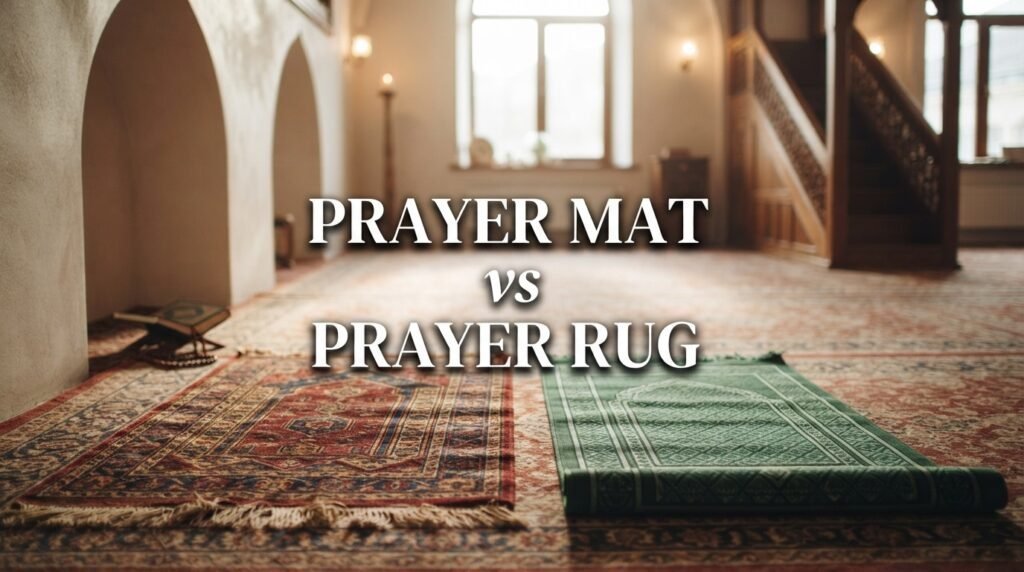
Prayer mat or prayer rug- which one should you actually choose? The two terms are often used interchangeably, but they can describe slightly different types of floor coverings. In Pakistan, people commonly use janamaz or jai namaz when referring to the personal surface used for Salah, while “prayer rug” can describe a broader style of textile floor covering.
The main difference is usually size, construction, portability, and intended use rather than religious function. Understanding these differences can help you choose a suitable option for daily prayers at home, while traveling, or when creating a dedicated prayer space.
What is a Prayer Mat?
A prayer mat is generally a personal-sized surface designed for Salah. It provides a clean and defined area for prayer and can be rolled, folded, or stored easily after use.
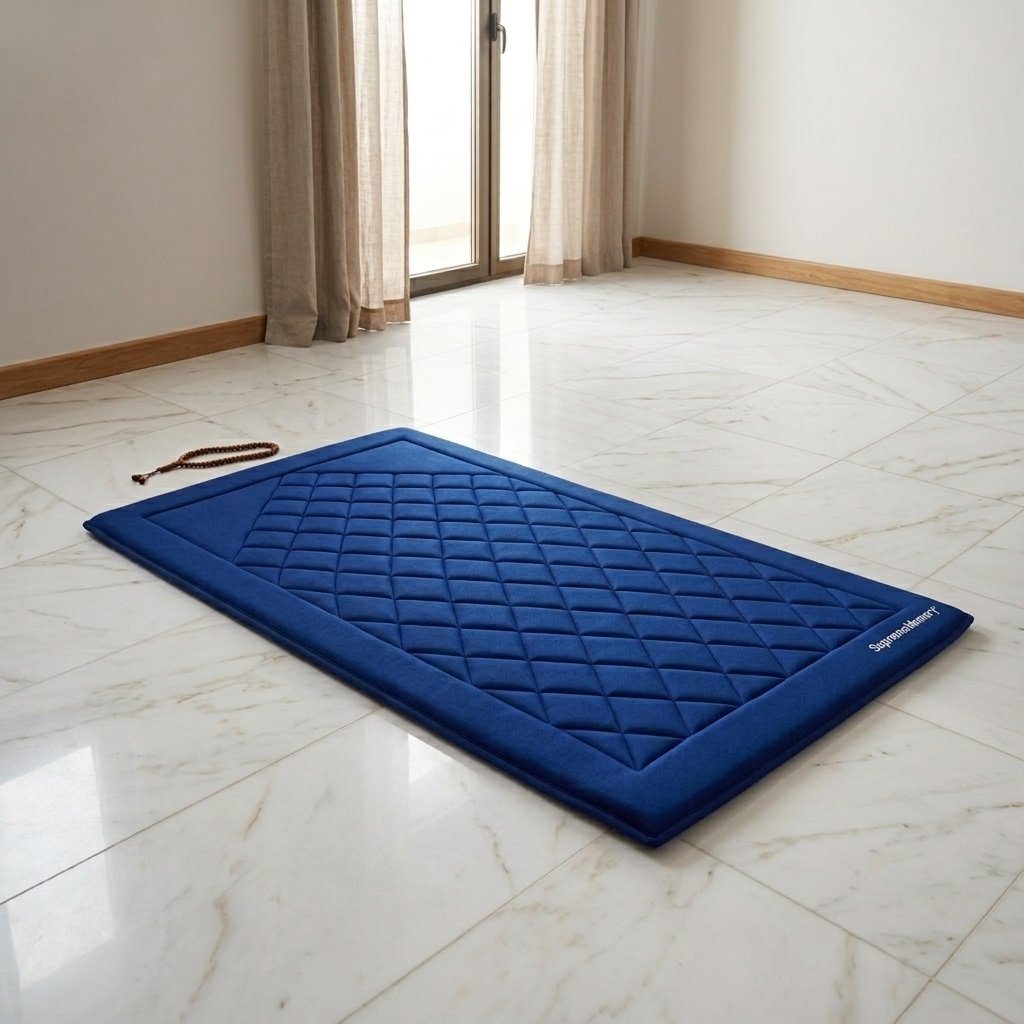
Traditional versions are commonly made from woven or tufted textiles. Modern designs may use different fabrics, foam layers, or supportive materials to provide a different underfoot feel.
A typical personal mat is designed to accommodate the positions used during prayer, including standing, bowing, prostration, and sitting.
What is a Prayer Rug?
A prayer rug can refer to a more substantial textile covering intended for prayer. It may have a thicker pile, heavier construction, larger dimensions, or more decorative detailing than a lightweight personal mat.
Some rugs are designed primarily for individual use, while larger versions may become part of a permanent prayer area.
The term “rug” therefore does not always indicate a completely different product. In everyday conversation, the names often overlap.
Prayer Mat vs Prayer Rug: Key Differences
The easiest way to understand the distinction is to compare their typical characteristics.
| Feature | Personal Prayer Mat | Prayer Rug |
| Size | Usually personal-sized | Can be larger |
| Weight | Generally lighter | Often heavier |
| Storage | Easy to roll or fold | May need more space |
| Construction | Textile or modern materials | Often textile-based |
| Use | Daily or portable prayer | Home or dedicated prayer space |
| Design | Often simple or decorative | May feature detailed patterns |
These are general distinctions, not strict rules. Manufacturers can produce products that combine characteristics from both categories.
Why Size is Useful to Consider
Size becomes important when deciding where and how you will pray.
For an individual using a small bedroom, apartment, or office space, a compact design is easier to store. It can be placed on the floor when needed and put away afterward without taking much room.
A larger rug may be more suitable for a dedicated prayer corner or family prayer area. Before choosing one, consider the available floor space and whether the covering will remain permanently in place.
Traditional Textile Designs
Traditional prayer coverings often feature geometric patterns, arches, floral details, or architectural motifs. These designs can create a visually distinct prayer space. They are also familiar across many Muslim cultures, including Pakistan.
However, decorative detail is a matter of personal preference. Some people prefer a simple surface that keeps the focus on prayer, while others appreciate traditional patterns.
Modern Materials and Construction
Today’s products are not limited to traditional woven fabrics. Manufacturers can use different materials to create surfaces that are lightweight, easier to clean, or more supportive underfoot.
The material should still be practical for regular cleaning and storage.
Which Option Works Better for Daily Prayer?
For daily personal use, a lightweight personal design is often easier to handle.
It can be useful for people who:
- Pray in different rooms
- Need to store the mat after use
- Travel frequently
- Have limited floor space
- Prefer a dedicated personal surface
A heavier rug can make more sense when it will stay in one location. The right choice depends less on the name and more on how you intend to use it.
What Should You Consider Before Buying?
Instead of focusing only on whether a product is called a mat or rug, check the practical details.
Surface Feel
Think about how the fabric feels under your feet and hands. A smooth textile may feel different from a padded surface.
Thickness
A thicker construction can provide a different underfoot experience, while a thinner design is generally easier to roll and carry.
Storage
If you put it away after every prayer, weight and folding or rolling convenience become important.
Cleaning
Look for a surface that can be maintained according to the manufacturer’s care instructions. This is particularly useful in homes where the floor is used frequently.
A Pakistani Perspective on Choosing Prayer Coverings
In Pakistan, prayer spaces vary widely. A family home may have a dedicated room, while an apartment may use a small corner of a bedroom or living area.
Some people also keep a personal mat at the office, workplace, university, or while traveling.
This makes portability especially useful for many users. A design that can be stored neatly and carried easily may be more practical than a large decorative rug.
When considering a modern prayer surface, focus on its construction, intended use, maintenance, and the experience it provides rather than choosing solely by appearance.
Choose According to Your Prayer Space
There is no universal winner between a prayer mat and a prayer rug. The better option depends on your available space, preferred material, storage habits, and whether you need something portable or permanent.
For everyday individual use, a personal-sized design is usually practical. For a dedicated prayer area, a larger rug may better suit the space.
Ultimately, choose a clean, well-made surface that fits naturally into your routine and allows you to maintain a dedicated place for Salah.
FAQs
- Is a prayer mat and prayer rug the same thing?
Not always. A prayer mat usually refers to a personal-sized prayer surface, while a prayer rug can describe a larger or heavier textile covering. However, the terms are often used interchangeably. - What is a janamaz used for?
A janamaz is a personal surface used during Salah. It provides a defined and clean area for prayer and can be rolled or folded for storage. - Is a thicker prayer surface better?
Not necessarily. Thickness is a personal preference. Consider whether you prefer cushioning or a thinner surface that is easier to carry and store. - Are memory foam prayer mats suitable for daily use?
They can be suitable for daily use if the construction, covering, and maintenance requirements fit your routine. A padded design provides a different feel from a traditional textile surface. - Should I choose a prayer mat or rug for a small Pakistani home?
A compact personal design is often more practical for smaller rooms because it can be placed down when needed and stored afterward without taking much floor space.