Have you ever felt knee pain, ankle discomfort, or body strain while offering Salah on a hard floor? Choosing the right prayer mat can make your prayer experience more comfortable and peaceful. In Pakistan, traditional Janamaz has been used for generations, but modern options like memory foam prayer mats are becoming popular because of their extra comfort and support.
Both traditional Janamaz and memory foam prayer mats have their own benefits. The better choice depends on your comfort needs, health concerns, and personal preference. Let’s compare both options to help you choose the right one.
What is a Traditional Janamaz?
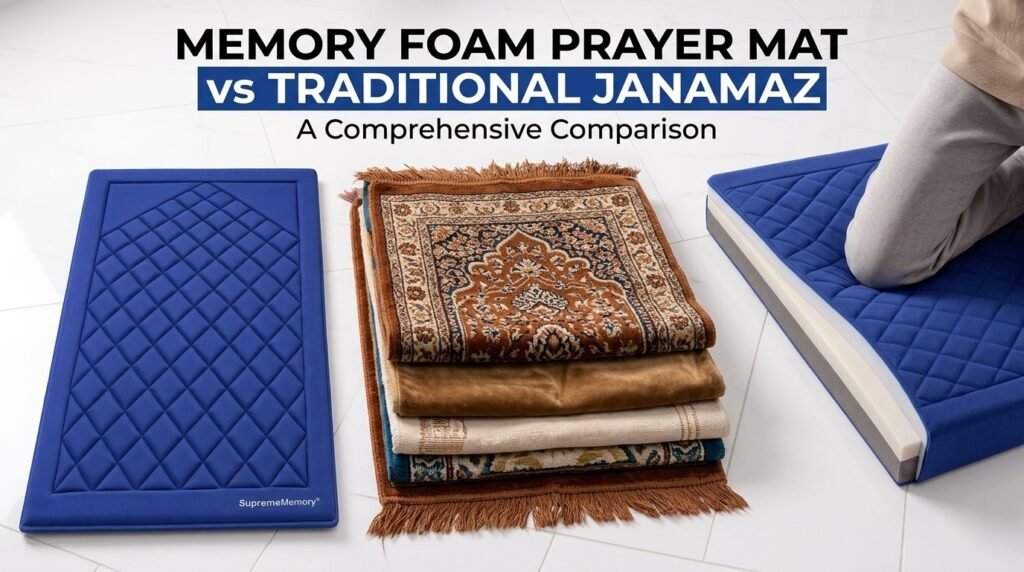
A traditional Jai namaz is a simple prayer mat commonly used in Pakistani homes, mosques, and Islamic centres. It is usually made from cotton, polyester, velvet, or other lightweight fabrics.
Traditional mat designs often include beautiful Islamic patterns, mosque images, and elegant colours. They are easy to fold, carry, and store. But you should know what is the correct way to fold a jai namaz. Many people prefer them because they are affordable and have cultural and religious importance.
However, most traditional mats have a thin surface. They provide limited cushioning, especially when placed on hard marble, tiles, or wooden floors.
What is a Memory Foam Prayer Mat?
A memory foam prayer mat is a modern type of Jaye namaz designed with a soft foam layer inside. This foam adjusts according to your body pressure and provides extra cushioning during Salah.
These mats are designed to reduce pressure on sensitive areas like knees, ankles, and joints. They are especially helpful for elderly people, people with joint discomfort, or anyone who wants extra comfort while praying. These mats combine modern technology with the spiritual importance of a ja namaz.
Comfort and Support Comparison
Comfort is one of the biggest differences between a memory foam jai namaz and a traditional Janamaz.
A traditional one provides a clean and comfortable surface but does not offer much support. When praying on a hard floor, your knees and joints may experience more pressure.
A memory janamaz provides a softer experience. The foam layer absorbs pressure and creates a comfortable surface for standing, bowing, and prostrating.
For people who pray multiple times daily, this extra support can make a noticeable difference.
Which Prayer Mat is Better for Knee and Joint Comfort?
Many Pakistani households have marble or tiled floors, which can feel uncomfortable during long prayers. A thin Ja Namaz may not provide enough protection from the hardness of the floor.
A memory jaye namaz is usually a better choice for people who experience knee pain, back discomfort, or joint pressure. The soft foam layer helps reduce impact and provides better cushioning.
It can also be a good option for senior citizens who need additional comfort while performing Salah.
Durability and Maintenance
Can you wash a prayer mat? Well, a traditional janamaz is lightweight and easy to clean. Many designs can be washed easily and dried quickly. Because of their simple construction, they can last for years with proper care.
Memory mats require slightly more care. They should be cleaned according to the manufacturer’s instructions to protect the foam layer. High-quality memory mats are durable and maintain their shape for a long time.
When choosing a memory jai namaz, quality material and proper maintenance are important factors.
Portability and Daily Use
If you travel frequently or need a prayer mat for work, a traditional jaye namaz may be more convenient. It is lightweight and can easily fit into a bag.
Memory prayer mats are usually thicker because of the foam layer. They may not be as compact as traditional mats, but they provide better comfort for home use.
For daily prayers at home, many people prefer the comfort of a memory foam option.
Design and Aesthetic Appeal
Traditional Jai namaz offers a wide variety of colours, patterns, and Islamic designs. Many people choose them because of their beautiful appearance and traditional feel.
Memory ja namaz are also available in modern designs. They focus more on comfort while maintaining a simple and elegant look.
Today, Pakistani consumers can find prayer mats that combine attractive designs with advanced comfort features.
Memory Foam Prayer Mat vs Traditional Janamaz: Final Verdict
Both traditional Janamaz and memory foam prayer mats have their own advantages. A traditional Janamaz is a great choice for people who want a lightweight, affordable, and classic mat.
However, a memory jai namaz is a better option for those looking for extra comfort, joint support, and a softer praying experience.
For Pakistani homes with hard floors, elderly family members, or people who spend more time in Salah, a memory janamaz can provide better comfort and support.
Choosing the best option is not only about design or price. It is about creating a comfortable and peaceful environment for worship.
Also Read: Can We Pray Without Prayer Mat or Jai Namaz
FAQs
- Is a memory foam prayer mat better than a traditional Janamaz?
A memory foam jaye namaz provides more cushioning and support compared to a traditional one. It is especially beneficial for people who experience knee or joint discomfort.
- Can elderly people use a memory foam jai namaz?
Yes, they are a good option for elderly people because they provide extra softness and reduce pressure on knees and joints during Salah.
- Are memory ja namaz suitable for Pakistani homes?
Yes, they are suitable for Pakistani homes, especially where floors are made of marble, tiles, or other hard materials.
- How do I clean a memory foam prayer mat?
You should know how to wash prayer mat? Most memory mats should be cleaned with a damp cloth and mild cleaning products. Avoid harsh washing methods that may damage the foam.
- Which jaye namaz should I buy for daily Salah?
For daily Salah, a memory foam prayer mat can be a better choice if you want extra comfort. It is the most comfortable prayer mat for daily salah.