When it comes to furnishing a home, the sheer volume of choices can be overwhelming. Do you go with the time-tested, heavy heirloom pieces, or do you opt for the sleek, budget-friendly modern alternatives?
In Pakistan, this debate almost always boils down to a classic showdown: Traditional Chinioti Solid Wood versus Modern Engineered Wood (MDF/Plywood).
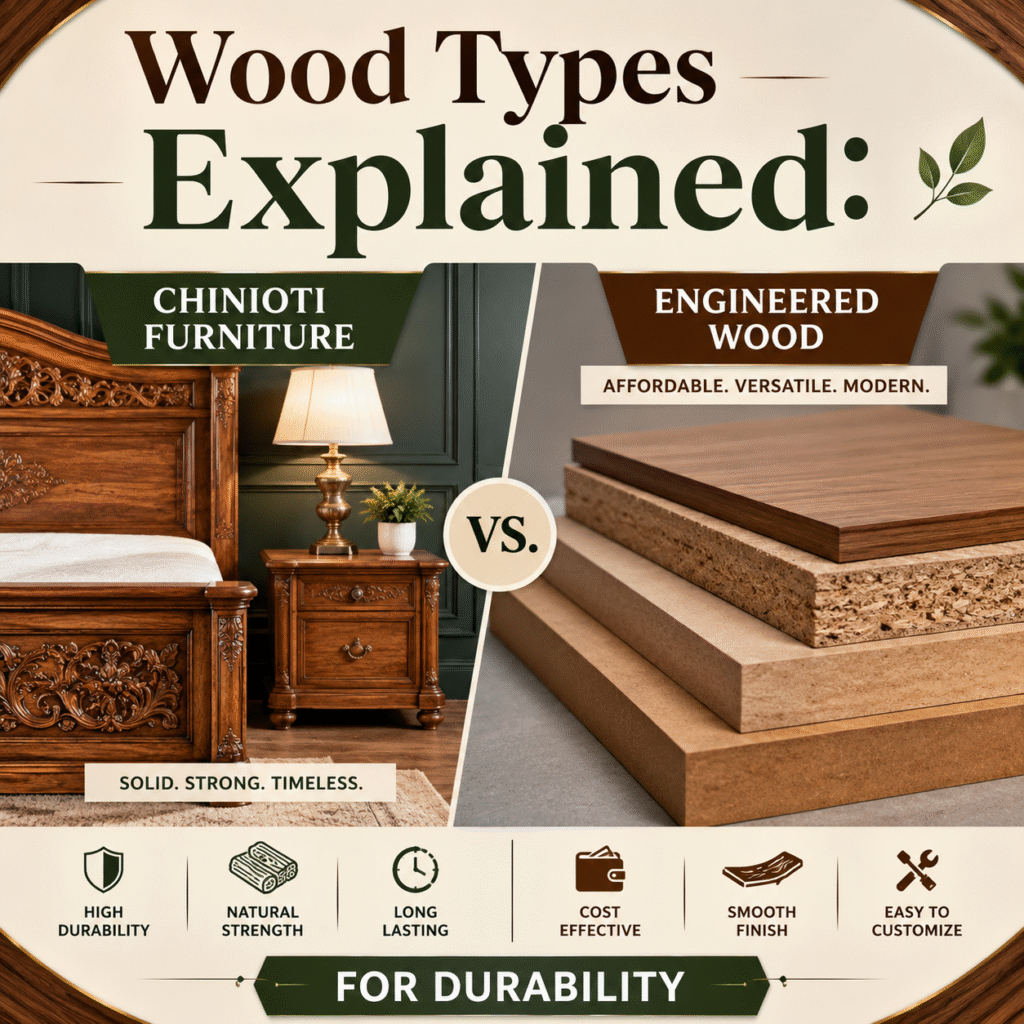
Both have carved out significant spaces in contemporary interior design, but they offer completely different lifespans, strengths, and vulnerabilities. If you are trying to decide where to invest your hard-earned money, here is a breakdown of how Chinioti solid wood compares to engineered wood when it comes to long-term durability.
What is Chinioti Furniture? (The Solid Wood Standard)
Chiniot is world-famous for its master artisans who carve intricate, breathtaking designs into solid hardwood—primarily Sheesham (Indian Rosewood) or Tala (Walnut). When we talk about Chinioti furniture, we are talking about 100% natural solid timber cut straight from a tree.
The Durability Pros:
- Generational Lifespan: High-quality Sheesham wood is incredibly dense and naturally resistant to decay. A well-crafted solid wood bed or dining table can easily last 50 to 100 years, often becoming a family heirloom.
- Structural Strength: Solid wood fibers are tightly knit, meaning it can bear immense weight without bending, warping, or sagging over time.
- Repairability: If solid wood gets scratched, dented, or stained, it doesn’t mean the end of the world. It can be sanded down, re-polished, and restored to its original glory quite easily.
The Durability Cons:
- Environmental Sensitivity: Because it was once a living organism, solid wood breathes. It expands in humid monsoon seasons and contracts in dry winters. If the wood wasn’t seasoned (dried) properly before manufacturing, it can split or warp over time.
- Pest Vulnerability: Natural wood is always a target for termites if the home isn’t treated or if the wood lacks proper chemical seasoning.
What is Engineered Wood? (The Modern Alternative)
Engineered wood products—like MDF (Medium-Density Fibreboard), plywood, and chipboard—are man-made. They are created by binding together wood strands, fibers, or veneers using high-pressure industrial adhesives and resins.
The Durability Pros:
- Excellent Stability: Unlike solid wood, engineered wood does not expand, contract, or warp when exposed to temperature fluctuations. Its cross-grain structure makes it highly stable in volatile climates.
- Uniform Strength: There are no natural knots or weak spots in engineered wood. Every square inch has the exact same density and strength profile.
The Durability Cons:
- Moisture is the Enemy: If water seeps past the laminate or veneer layer of an MDF board, the internal fibers will soak it up like a sponge. Once engineered wood swells and bubbles from moisture, it is permanently ruined and cannot be fixed.
- One-and-Done Lifespan: You cannot sand down or deeply repair engineered wood. If the outer laminate chips or peels away, the fragile particle base beneath is exposed to the elements.
The Verdict: Which Wins for Longevity?
If absolute, multi-decade durability is your primary goal, Chinioti solid hardwood is the clear winner. It withstands wear and tear in a way that processed fibers simply cannot replicate.
However, solid hardwood is heavy, expensive, and requires a traditional aesthetic that doesn’t always fit into a fast-paced, contemporary apartment lifestyle.
Finding the Sweet Spot
You don’t necessarily have to choose between a heavy, antique look and flimsy disposable furniture. Modern manufacturing has allowed premium brands to bridge the gap. For instance, many homeowners love the look of clean lines but still want structural integrity.
If you want the sleek, minimalist aesthetics of modern design backed by premium build quality, exploring contemporary collections from established brands like Diamond Home Pakistan offers the perfect middle ground. They utilize high-tier material standards that give you modern functionality without sacrificing structural durability.
Ultimately, your best bet is a hybrid approach: invest in solid wood or premium structural pieces for your heavy-use items (like beds and dining sets), and utilize engineered wood for low-moisture, accent pieces (like wall shelves and media consoles).