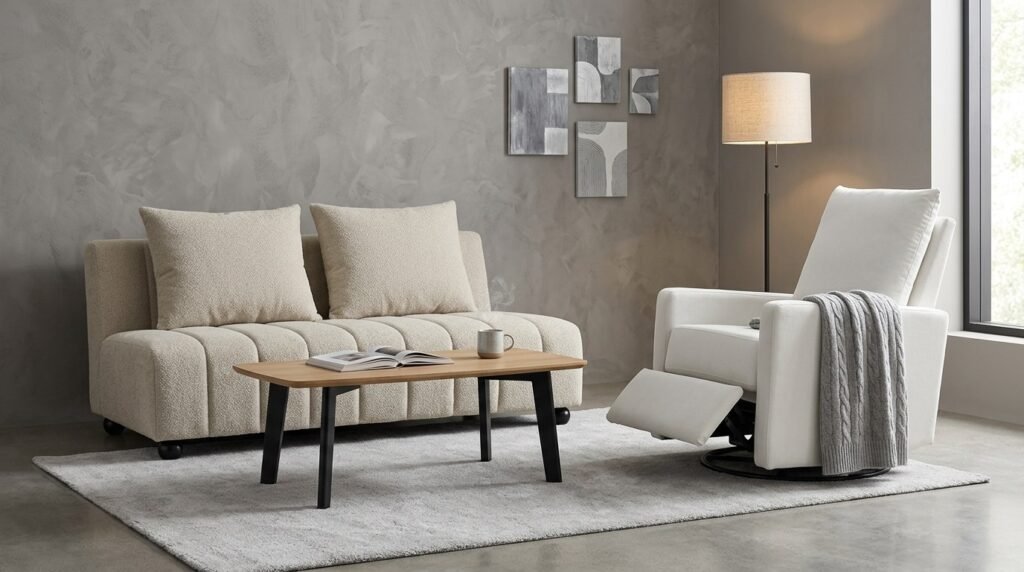
Is your recliner blocking the walkway, or sitting where nobody can see the TV? Placement decides whether a recliner feels like a favorite seat or a piece of furniture in the way. Leave 12 to 18 inches of space behind a standard recliner so it can open fully. Face it toward the TV or the main seating group. Keep a clear path of at least 30 inches around it.
The sections below show how to work out the right spot for your room.
Quick Answer: Where Should a Recliner Go?
The best spot usually meets these four conditions:
- It has a clear view of the TV or the center of the room.
- It has enough space behind and in front to recline fully.
- It doesn’t block doors, walkways, or the route to other seats.
- It sits close enough to a side table and a power outlet.
If one spot meets all four, you’ve found it.
Measure Before You Move Anything
Most placement mistakes happen because people measure the chair upright and forget about the open footrest. So, how to measure room for furniture?
Check the Reclined Depth
Look at the product specifications for the “fully reclined” length. Many recliners stretch much longer when open than when upright. Wall-hugger models need only a few inches behind them, while standard ones need more.
Mark It With Tape
Use masking tape on the floor to outline the reclined footprint. Walk around the outline, open the nearby doors, and slide any chairs past it. This takes five minutes and saves you from moving a heavy chair twice.
Layouts for Common Pakistani Living Rooms
Every living room needs a comfortable recliner. Most homes here fall into one of three layouts.
Small Lounge or Apartment
In compact flats, put the recliner sofa in a corner, angled about 30 to 45 degrees toward the TV. A wall-hugger style works well here because it reclines close to the wall. Skip a bulky coffee table and use a slim side table instead.
TV Lounge With a Sofa Set
Many homes have a 3+2+1 sofa design arrangement. Replace the single-seater with a recliner, or place it at the end of the sofa line so it forms an L-shape. Everyone keeps the same view of the TV, and nobody has to step over a footrest.
Large Drawing Room
In a bigger room, a recliner can sit as its own reading or relaxing zone. Place it near a window or lamp, with a small table and a rug beneath. Keep it out of the main walkway between the entrance and the guest seating.
Keep Walkways and Doors Clear
Think about how people move through the room, not just where the chair fits. These rules help:
- Leave at least 30 inches for main walkways.
- Keep the footrest path clear of door swings.
- Never block access to a balcony, window, or AC remote area.
- Avoid placing it where someone must cross in front of the TV to pass.
Children and elderly family members also need a wide, trip-free route to the chair.
Think About AC, Fans, and Sunlight
Pakistani summers affect where you want to sit. Placing a recliner directly under an AC vent can feel too cold after an hour. A spot in the direct path of a ceiling fan can bother some people too.
Afternoon sun through a west-facing window can heat the seat and fade upholstery over time. If that’s your only free spot, use light curtains or blinds. Dust is also common, so keep the chair a few inches from open windows and wipe it down regularly.
Add Side Tables, Lighting, and Power
A recliner is more useful with a few nearby extras:
- Side table: Choose one that’s about the height of the armrest.
- Lamp: A floor lamp behind one shoulder helps with reading.
- Power outlet: If your recliner has an electric motor or USB port, place it within cable reach, and avoid stretching extension cords across the floor.
If load-shedding is common in your area, check whether your model has a manual option or battery backup.
Protect Your Floors
Marble and tile floors scratch easily when you drag a heavy chair, and reclining mechanisms can leave marks over time. Place felt pads under the feet, or set the chair on a low-pile rug. On carpets, check that the chair stays stable when reclined and doesn’t sink on one side.
Choose Modern Recliners That Fit the Room You Have
Placement works best when you pick a chair that suits your space from the start. Modern recliners come in compact, swivel, and power versions, and each needs a different amount of room. Measure your space first, then compare dimensions, not just looks. Sit in a chair before buying if you can, and check the warranty on the mechanism.
A Well-Placed Recliner Makes the Whole Room Work Better
A good position balances four things: reclining space, a clear view, easy movement, and the right distance from cooling, light, and power. Measure first, tape the footprint, and test the layout before you settle on it. Small adjustments of a few inches often make the biggest difference.
Also Read: What is a Glider Recliner?
FAQs
How far should a recliner be from the wall?
A standard recliner needs about 12 to 18 inches behind it. A compact design may need only 3 to 6 inches. Check your chair’s specifications for the exact figure.
Can I put a recliner in front of a window?
Yes, if the chair doesn’t block the window and the sun doesn’t hit it directly for long hours. Curtains or blinds help protect the fabric or leather.
Should a recliner face the TV directly?
Not always. Angling it slightly toward the TV is often more natural and also keeps conversation easy. Aim for a clear view without twisting your neck.
Can I fit a recliner in a small living room?
You can. Choose a compact model, place it in a corner, and use a slim side table. Measure the reclined length first so you don’t run out of space.
Where should a recliner go in a room with a sofa set?
Place it at one end of the sofa arrangement or at a slight angle across from it. This keeps everyone facing the TV and leaves a clear path through the room.