Is your pillow secretly destroying your neck every single night? Thousands of people in Pakistan deal with chronic neck pain, upper back tightness, and morning headaches. Many blame their mattress, their work desk, or simply getting older. But the real culprit is often sitting right under your head: your pillow.
Standard cotton or duck down feather pillows feel soft at first. However, they collapse under the weight of your head within hours. This leaves your neck bent at an unnatural angle all night. Enter the ergonomic neck pillow. Promoted as a total fix for spinal pain, these contour pillows promise deep sleep and painless mornings.
Do they actually work, or are they just clever marketing? Let us look at what the science says about spinal alignment and nighttime recovery.
The Science of Nighttime Spinal Alignment
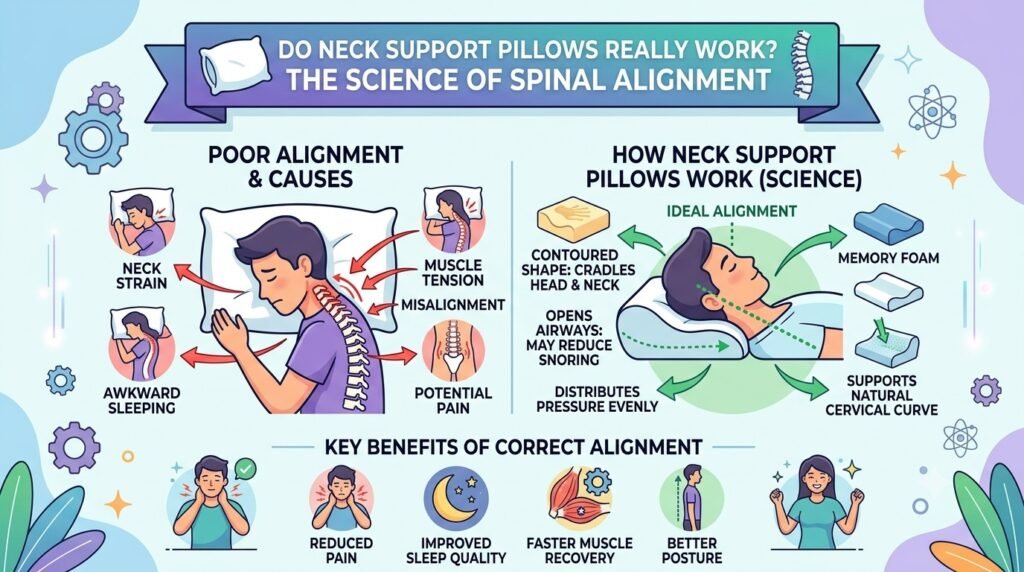
Your spine is not a straight stick. It has natural curves that protect your body from shock and pressure. Your cervical spine, the seven small bones that make up your neck, curves slightly inward toward your throat. This shape is called the cervical lordosis.
When you sit, stand, or walk, your muscles work hard to keep this curve intact. Sleeping is the only time your neck muscles get a complete break. However, that break only happens if your cervical spine stays neutral while you rest.
Neutral Alignment: Head, neck, and middle back form a natural, stress-free line.
If your pillow is too high, your head gets pushed forward. If it is too flat, your head drops backward. Both positions stretch your neck muscles, strain your ligaments, and pinch nerves. Over weeks and months, poor alignment leads to muscle spasms, tension headaches, and early wear on your spinal discs.
How a Neck Support Pillow Functions
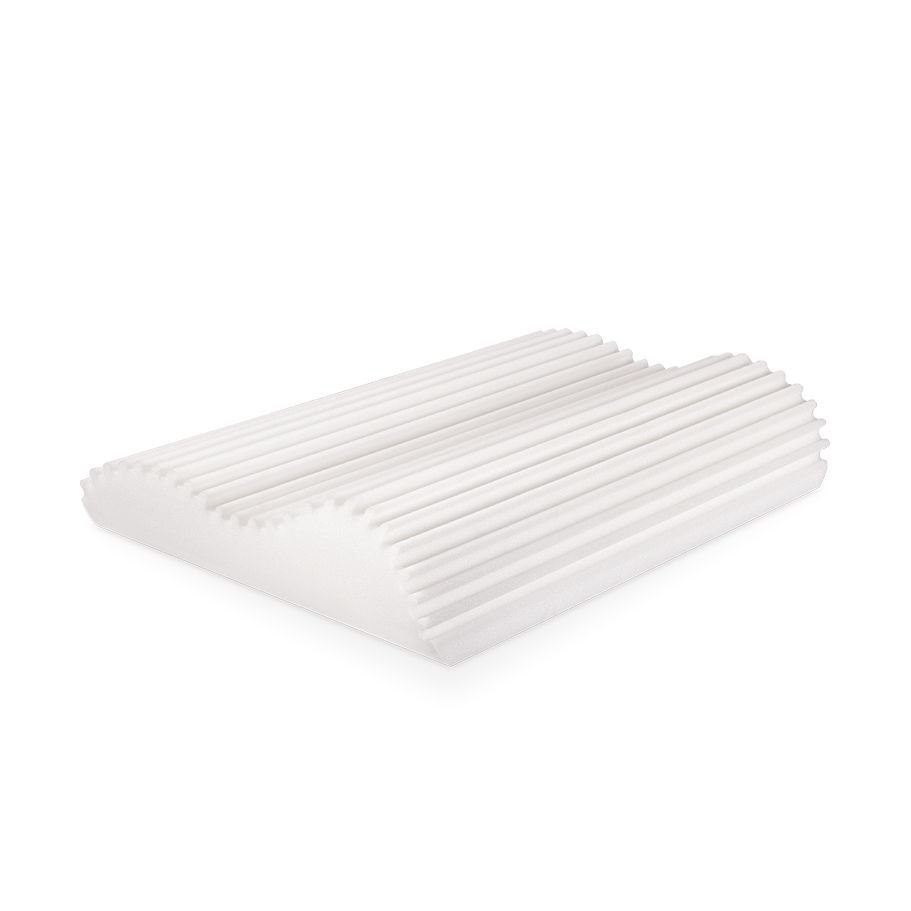
A standard flat pillow supports only your head. This leaves a hollow gap beneath your neck. A proper neck support pillow is designed differently. It features a curved shape with a deeper central groove for your head and a raised roll to support your neck.
Here is what happens when you use one:
- Gap Filling: The raised ridge fills the space between your mattress and your neck, taking pressure off your spinal joints.
- Pressure Redistribution: Instead of your head bearing all the weight, your neck shares the load evenly.
- Muscular Relaxation: Because the physical structure supports your spine, your neck muscles can finally relax completely.
Medical studies consistently show that contoured pillows reduce neck pain far more effectively than traditional feather or down pillows. Feather pillows lose shape quickly, while memory foam contoured options maintain firm support throughout the night.
How Your Sleep Position Changes Everything
Not everyone needs the same shape or height. Your ideal setup depends heavily on how you sleep.
1. Side Sleepers
Most Pakistani adults sleep on their side. In this position, the gap between your ear and the outer edge of your shoulder is wide. You need a thicker neck pillow that keeps your head centered between your shoulders. If your pillow is too thin, your head tilts down, putting massive strain on the side of your neck.
2. Back Sleepers
If you sleep on your back, you need a medium-profile pillow. The goal is to support the natural arch of your neck without pushing your head forward toward your chest. Look for a design with a gentle center dip.
3. Stomach Sleepers
Stomach sleeping is notoriously tough on the spine because it forces you to turn your head 90 degrees just to breathe. If you cannot break this habit, use a very thin, flat pillow or skip the pillow under your head entirely.
Real Benefits vs. Common Myths
Can a specialized cushion fix every back problem? No. It helps to separate proven facts from false promises.
| Myth | Fact |
| “Harder pillows are always better for neck pain.” | Extra hard surfaces create painful pressure points. You need firm support with comfortable cushioning. |
| “One size fits every person.” | Pillow height must match your body frame and shoulder width. |
| “It will cure my slipped disc overnight.” | Pillows relieve muscle strain and improve posture, but severe structural issues need medical treatment. |
| “Memory foam lasts forever.” | Most foam cushions lose their supportive density after 2 to 3 years of daily use. |
Making the Switch in Pakistan: What to Expect
Buying a supportive pillow is only half the battle. Adjusting to it takes time.
If you have used soft cotton or rulee (raw cotton) pillows your entire life, a contour pillow will feel strange at first. Your neck muscles have adapted to poor posture over years. When you force them into correct alignment, they may feel slightly sore for the first few nights.
- Give it 7 to 10 days: Do not throw the pillow away after night one. Your body needs time to adjust.
- Check your mattress: A sagging mattress will ruin your alignment no matter how good your pillow is.
- Watch the heat: Pakistan’s warm weather can make dense memory foam feel hot. Look for options with breathable bamboo covers or cooling gel layers.
Final Thoughts: Say Goodbye to Morning Stiffness
Do they really work? Yes, science confirms they do. A well-designed neck support pillow keeps your spine neutral, reduces pressure on sensitive joints, and lets tired muscles recover overnight. While it cannot cure serious medical conditions on its own, it is one of the easiest, most effective lifestyle changes you can make to stop morning neck pain.
Read More: Which Pillow is Best For Stiff Neck?
Frequently Asked Questions
- How do I know if my pillow is causing my neck pain?
If you wake up with stiffness that slowly fades after you get out of bed, your sleeping setup is likely responsible. Stacking multiple pillows or constantly folding your pillow in half during the night are also clear signs you need a better option.
- Which material is best for a neck pillow in warm climates?
High-density memory foam provides the best support, but it can retain heat. Look for memory foam infused with cooling gel beads, or choose an open-cell latex option paired with a 100% breathable cotton cover.
- How long does it take to get used to a contoured pillow?
Most people adjust within 3 to 7 days. During the first few nights, you might feel mild discomfort as your neck muscles adapt to proper posture.
- Can a neck pillow help with tension headaches?
Yes. Many morning headaches stem from tight muscles at the base of the skull. By keeping your cervical spine aligned and reducing muscle strain, a supportive cushion can significantly lower the frequency of tension headaches.
- How often should I replace my neck support pillow?
You should replace your pillow every 2 to 3 years. Over time, foam degrades and loses its ability to keep your head and neck aligned.