
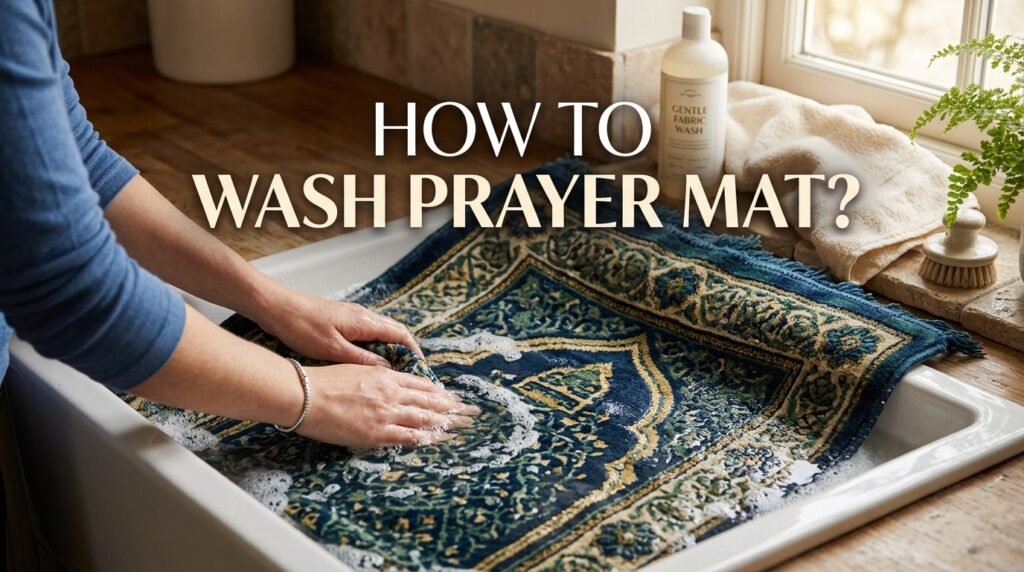
Have you ever looked at your prayer mat and wondered if it is time for a proper wash without damaging its fabric or design?
A prayer mat, also known as a Janamaz, jaye namaz, or jai namaz, is one of the most frequently used items in a Muslim home. It provides a clean and comfortable place for daily prayers, but because it is used regularly, it naturally collects dust, sweat, and dirt over time. Proper cleaning not only keeps your Jai Namaz fresh but also helps maintain hygiene and extends its lifespan.
If you have been searching for the best way to wash a prayer mat, this guide covers everything you need to know.
Why a Prayer Mat Requires Regular Cleaning
A prayer mat comes into direct contact with your hands, face, knees, and feet multiple times every day. Even if your floors are clean, dust particles, pet hair, and airborne allergens can settle into the fibers. Cleaning your Ja Namaz regularly offers several benefits:
- Maintains a clean and hygienic prayer space.
- Removes dust, allergens, and bacteria.
- Prevents unpleasant odors.
- Preserves fabric softness and color.
- Extend the life of your jai namaz.
A well-maintained prayer mat also enhances the comfort of every prayer.
Check the Material Before Washing
Not all prayer mats are made from the same fabric. Before washing, identify the material to avoid accidental damage. Common materials include:
- Cotton
- Polyester
- Velvet
- Microfiber
- Wool
- Memory foam prayer mats
Some luxury or embroidered Jaye Namaz designs may require extra care, while machine-made mats can usually handle regular washing. Always check the care label if one is available.
How to Wash a Prayer Mat by Hand
Hand washing is the safest method for most prayer mats, especially those with embroidery or decorative patterns.
Follow these simple steps:
Step 1: Shake Off Loose Dust
Take the janamaz outside and gently shake it to remove dust, lint, and loose dirt.
Step 2: Prepare Mild Soapy Water
Fill a tub or bucket with lukewarm water and add a small amount of mild detergent. Avoid bleach or harsh cleaning chemicals.
Step 3: Gently Wash
Place the Jai Namaz in the water and gently rub stained or dirty areas using your hands or a soft cloth.
Do not scrub aggressively, as this may damage the fabric or printed design.
Step 4: Rinse Thoroughly
Rinse the janamaz with clean water until all soap residue has been removed.
Step 5: Air Dry
Lay the prayer mat flat or hang it in a shaded, well-ventilated area.
Avoid direct sunlight for long periods, as excessive heat may fade the colors.
Can You Wash a Prayer Mat in a Washing Machine?
Yes, many modern jai namaz are machine washable. However, follow these precautions:
- Use a gentle or delicate cycle.
- Wash with cold or lukewarm water.
- Use mild liquid detergent.
- Avoid bleach and fabric softeners.
- Wash separately or with similar soft fabrics.
If your Jaye Namaz has heavy embroidery, tassels, foam padding, or delicate stitching, hand washing is usually the better option.
How to Remove Stains from a Janamaz
Small stains should be treated before washing the entire mat. For food or drink stains:
- Dab the area with a damp cloth.
- Apply a small amount of mild detergent.
- Let it sit for a few minutes.
- Gently clean without rubbing too hard.
Avoid strong stain removers, as they may affect the fabric texture or colors.
How Often Should You Wash a Prayer Mat?
The ideal cleaning frequency depends on how often it is used. A good guideline is:
- Daily use: Every 2–4 weeks.
- Occasional use: Every 1–2 months.
- During allergy season: Wash more frequently if dust accumulation is noticeable.
If the prayer mat develops an odor or visible stains, clean it immediately.
Tips to Keep Your Prayer Mat Clean Longer
Simple habits can reduce the need for frequent washing.
- Perform wudu before prayer whenever possible.
- Keep the prayer area clean.
- Fold or roll the Ja Namaz after use.
- Store it in a dry, dust-free place.
- Avoid placing shoes or heavy furniture on it.
These small practices help preserve both cleanliness and appearance.
Choosing a Quality Prayer Mat
A good jai namaz should provide comfort, durability, and easy maintenance. Soft materials, strong stitching, and high-quality fabric make cleaning much easier while ensuring long-lasting performance.
If you’re looking for a comfortable and beautifully designed Janamaz, Diamond Foam offers Supreme Memory Foam Prayer Mat – The Most Comfortable Janmaz For Daily Salah. It is soft, durable, and suitable for everyday use.
Final Thoughts
Knowing how to wash a prayer mat properly helps preserve its beauty and keeps your prayer space clean every day. Whether you choose hand washing or machine washing, gentle cleaning methods will protect the fabric and extend the life of your Ja Namaz.
With regular care, proper storage, and quality materials, your Memory Foam Prayer Mat can remain fresh, comfortable, and ready for daily worship for many years.
Frequently Asked Questions
- What is the best way to wash a prayer mat?
Hand washing with mild detergent and lukewarm water is the safest method for most janamaz. Machine washing is suitable only if the care instructions allow it.
- Can I wash my Janamaz in a washing machine?
Yes, many polyester and cotton jaye namaz are machine washable using a gentle cycle and cold water. Delicate or embroidered prayer mat should be washed by hand.
- How often should I clean my prayer mat?
A janamaz used daily should generally be washed every two to four weeks, or sooner if it becomes dirty or develops an odor.
- How do I dry a prayer mat after washing?
Allow it to air dry in a shaded, well-ventilated area. Avoid using high heat or prolonged direct sunlight, as it can weaken the fabric and fade the colors.