Weighted blankets have gone from being a niche trend to a beloved sleep essential for millions. Fans claim they fall asleep faster, stay asleep longer, and wake up feeling more refreshed and relaxed. But with all the hype, a simple question remains: do they actually work? And could one be the secret to better sleep for you?
Let’s dive in with a fresh, detailed guide that breaks down the science, benefits, and how to choose the perfect weighted blanket for a night of truly restful sleep.
How Weighted Blankets Work: The Science of the “Cuddle”
At their core, weighted blankets use gentle, evenly distributed pressure to create a powerful effect known as Deep Pressure Touch (DPT). This therapeutic pressure on the body can have a profound impact by:
- Calming the Nervous System: DPT helps to shift your nervous system from “fight or flight” mode (sympathetic) to “rest and digest” mode (parasympathetic). This quiets your body’s stress response, lowers heart rate, and makes it easier to feel safe and relaxed.
- Encouraging Relaxation Chemicals: The sensation of deep pressure stimulates the release of key neurotransmitters. This includes serotonin, which promotes a feeling of well-being, and melatonin, the hormone that tells your body it’s time to sleep.
- Providing a Sense of Security: Many people describe the sensation as a steady, reassuring hug that helps them feel grounded and secure, making it easier to settle down and quiet a racing mind.
Early research and countless user reports suggest that weighted blankets can significantly improve sleep quality and reduce feelings of anxiety for many.
Who Might Benefit from a Weighted Blanket?
A weighted blanket can be a game-changer if you:
- Are a Restless Sleeper: If you toss and turn throughout the night, the gentle weight can help to keep you more still and settled.
- Experience Occasional Anxiety or Nighttime Stress: The calming effect can be especially helpful for quieting a busy mind and reducing pre-sleep worries.
- Wake Up Often: By promoting a deeper state of relaxation, a weighted blanket can help you achieve more continuous, uninterrupted sleep.
- Are a Light Sleeper: If you are easily disturbed by small noises or movements, the grounding pressure can help you feel less sensitive to your surroundings.
Who Should Be Cautious?
While generally safe for adults, weighted blankets are not for everyone. It’s crucial to exercise caution if you are in any of the following groups:
- Young Children: Weighted blankets are not recommended for children under 3 years old or anyone who cannot move the blanket on their own.
- Individuals with Breathing Issues: People with severe asthma, COPD, or sleep apnea should consult a healthcare professional before use, as the weight may feel restrictive.
- Circulation Problems: Those with certain circulation issues or chronic pain conditions should also seek medical advice first.
- Post-Surgery Patients: Anyone recovering from recent surgery should use a weighted blanket only with their doctor’s guidance.
Your Step-by-Step Guide to Choosing the Right Blanket
- Finding the Perfect Weight: This is the most critical step.
- The Golden Rule: A simple rule of thumb is to choose a blanket that is about 8 to 10% of your body weight.
- Example: If you weigh 70 kg, a 6 to 7 kg blanket would be a good starting point.
- Sharing a Bed? If you share a bed, consider separate blankets so each person can select the right weight for their body. This also prevents motion transfer and ensures a personalized sleep experience.
- Picking Fabrics and Fills:
- Outer Fabric: For hot sleepers, a breathable outer fabric like cotton or bamboo is a must. For those who love to be extra cozy, a plush minky or fleece fabric will feel wonderfully soft but can retain more heat.
- Fill Type: The weight comes from the fill inside. Glass beads are small, quiet, and create a smooth, dense feel. Plastic pellets are larger and can feel a bit bulkier and warmer.
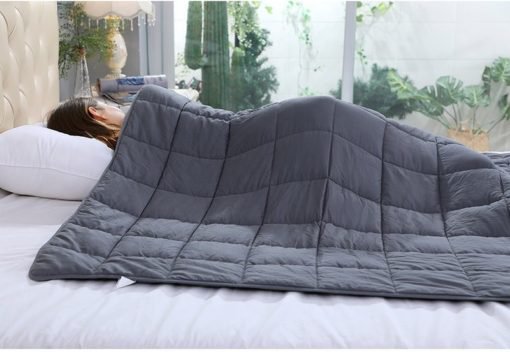
- Construction: Look for blankets with a stitched box or grid pattern. This ensures the weight remains evenly distributed and prevents the fill from bunching up in one corner.
- How to Use It:
- Start Slowly: Begin by using the blanket for 15 to 30 minutes in the evening while reading or relaxing. Once you feel comfortable, you can try using it overnight.
- Proper Placement: Drape the blanket over your body from your shoulders to your feet, but never cover your face or head.
- Listen to Your Body: If the blanket feels too heavy or intense, try a lighter weight or use it only for your pre-sleep wind-down routine.
What to Expect & How to Maximize Results
- Best Case: You might find yourself falling asleep faster, experiencing fewer nighttime awakenings, and feeling a calmer body and mind.
- Realistic View: The benefits can be subtle at first but often become more noticeable over 1 to 2 weeks of consistent use.
- It’s Not a Cure-All: A weighted blanket is a powerful tool, but it will not fix poor sleep habits on its own. Pair it with simple sleep hygiene basics for the best results:
- Maintain a steady sleep schedule.
- Create a cool, dark, and quiet room.
- Limit late-night caffeine and heavy meals.
- Establish a short, relaxing wind-down routine.
Conclusion
Weighted blankets offer a simple yet incredibly effective way to promote relaxation and enhance sleep quality. By providing gentle, steady pressure, they help to calm the nervous system, making it easier to drift into a deep, restful sleep. When paired with a healthy bedtime routine and the right weight and fabric, a weighted blanket can be the soothing, comforting upgrade your sleep has been missing—like a warm, reassuring hug every single night.