We’ve all been there: waking up with that nagging, stiff ache at the base of the skull and blaming it on a stressful day or a heavy laptop bag. But more often than not, the culprit is literally right under your nose.
Most people cling to their pillows for way too long. We don’t realize that the inner layers eventually disintegrate, leaving us with a flat, lifeless slab. If you find yourself constantly “bunching up” or folding your pillow in the middle of the night just to get comfortable, your sleep essentials are no longer doing their job.
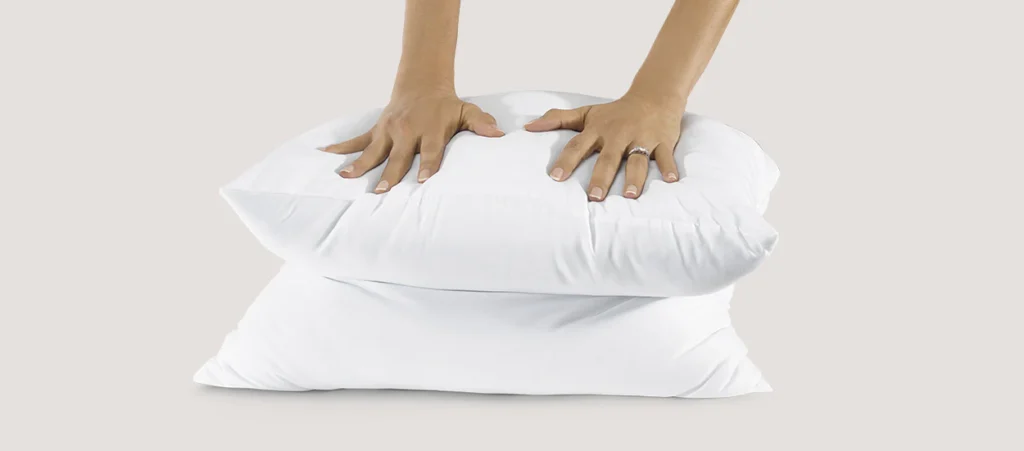
Enter the “Fold Test” It’s a dead-simple, 30-second trick used by ergonomic experts to see if a pillow still has enough “life” to support your cervical spine. Here is how to do it yourself.
How to Perform the ‘Fold Test’
This test is most effective for traditional fiberfill, down, or lower-density foam pillows. It’s all about resilience—how well the material fights back against the weight of your head.
- The Setup: Toss your pillow onto a flat surface (like a table or a stripped bed).
- The Fold: Fold the pillow exactly in half.
- The Weight: * For Fiberfill: Set a small weight on top—a shoe or a hardcover book works perfectly—for about five seconds.
- For Down or Memory Foam: Just hold it folded with your hands for a moment, then let go.
- The Pass: A “healthy” pillow should snap back to its original flat shape almost instantly.
- The Failure: If it just stays folded, or takes a long time to limp back into shape, it’s officially “dead.” The internal fibers have collapsed, and it can’t provide the structural support your neck needs for 8 hours of sleep.
Why a “Dead” Pillow is a Genuine Health Risk
When a pillow fails the fold test, it has lost its “loft.” Your pillow exists for one main reason: to keep your ears level with your shoulders so your spine stays neutral.
When that support vanishes, your head sinks too low, forcing your neck muscles to stay “on” all night just to protect your spine. This constant tension usually leads to:
- Morning Tension Headaches: This happens when the muscles at the top of your spine are pulled taut all night, creating a dull throb that wraps around your temples.
- Pinched Nerves: If your neck isn’t aligned, you’re putting raw pressure on delicate nerves. This is why some people wake up with “pins and needles” or numbness in their arms.
- The “Toss and Turn” Cycle: If the pillow is flat, your body will naturally keep moving to find comfort, preventing you from ever hitting that deep, restorative REM sleep.
Beyond the Fold: The 2-Year Rule
It’s worth noting that the fold test isn’t the only metric. High-quality materials like High-Density Memory Foam might pass the fold test for years because they are built to last.
However, hygiene is the second half of the equation. If you’re seeing yellowing (from sweat and natural oils) or you’re waking up with a stuffy nose (a classic sign of dust mite buildup), it’s time for a refresh. As a rule of thumb, even a sturdy foam pillow should be swapped out every 2–3 years to keep your sleep environment clean.
The Bottom Line
We wouldn’t dream of running a 10K in sneakers with worn-out soles, so why do we spend a third of our lives on surfaces that offer zero support?
A pillow isn’t just a soft place to land—it’s a piece of orthopedic equipment. If yours can’t pass a 30-second fold test today, your neck, spine, and morning energy levels are paying the price. It might be time to stop fluffing a “dead” pillow and actually invest in your recovery.