When you bring your newborn home, their safety becomes the absolute number one thing on your mind—and that journey starts right in their crib. The mattress you choose is more than just a surface; it’s the foundation of a truly safe sleep environment. Understanding the essential link between mattress firmness, materials, and infant health is crucial for minimizing scary risks like Sudden Infant Death Syndrome (SIDS) and ensuring healthy development.
Here is what every parent absolutely needs to know before investing in a crib mattress.
Why Firmness is the Ultimate Safety Measure
In the world of infant sleep, firmness is not something you can compromise on.
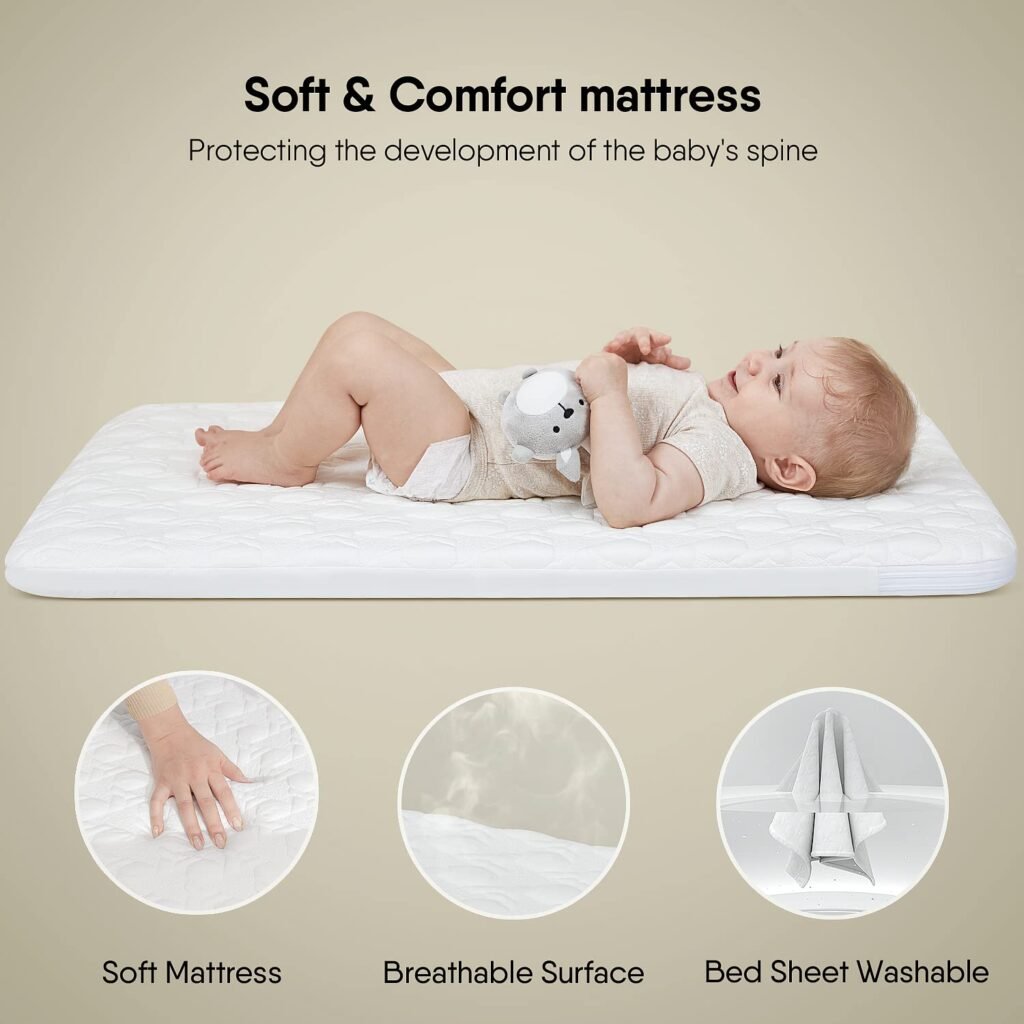
A soft mattress poses a serious suffocation risk because it can easily mold itself to the baby’s face if they roll over, potentially blocking their airway. A flat, robustly firm mattress, however, ensures that the surface holds its shape, keeping the baby’s face clear and their airways open.
The Golden Rules of Firmness:
- Always go for the firmest possible crib mattress. It should have virtually no noticeable give when you press down on the center. If it feels cushiony or too soft, it is simply not safe for an infant.
- The Home Safety Check: To test a mattress, press firmly in the middle. It should spring back instantly, providing a flat, unyielding surface.
- Beyond the Mattress: A firm mattress must be paired with an empty crib. Keep soft blankets, pillows, bumpers, and stuffed animals out of the sleep space to eliminate all smothering risks, following the “Bare is Best” mandate.
Decoding Infant Mattress Types and Materials
Now that safety is established, you can look at the materials that deliver that essential firmness and durability. The most common choices are Innerspring and Foam.
1. Traditional Choices
| Mattress Type | Key Benefit | What to Look For |
| Innerspring | Great support and good airflow thanks to the internal coils. | Look for a high coil count (around 135–150) and thick-gauge steel for maximum durability and rock-solid support. |
| Foam | Super lightweight, making sheet changes much easier, and generally simple to clean. | Insist on high-density foam. Avoid low-density options, as they compress too easily under a baby’s weight. |
Export to Sheets
2. Smart Investment Options
- Dual-Sided Mattresses: These are a clever, long-term buy. They offer an extra-firm infant side (safety priority) and a slightly softer toddler side (comfort priority), designed to grow with your child for several years.
- Organic and Natural Mattresses: These use materials like organic cotton, wool, and natural latex, providing a purer composition free from harmful chemicals.
Prioritizing Clean, Non-Toxic Materials
Your baby spends countless hours on their mattress, making the material composition just as important as the firmness. Prioritize breathability and non-toxic materials to maintain fresh, healthy air in the nursery:
- Organic Cotton & Wool: Cotton is soft and naturally hypoallergenic. Wool is a natural flame retardant and excellent at temperature regulation, keeping your baby cozy but not sweaty.
- Natural Latex: A highly durable, naturally dust-mite resistant, and breathable material that can be engineered for the necessary infant firmness. Make sure it is natural latex to avoid synthetic chemicals.
- Non-Toxic Foams: If choosing a Diamond Foam mattress, insist on CertiPUR-US certification. This guarantees the foam is made without harmful chemicals like heavy metals, phthalates, and formaldehyde, ensuring healthier indoor air quality.
What Must Be Avoided at All Costs
For infant safety, certain materials and products should be kept completely away from the crib:
❌ Memory Foam: This material is too squishy and heat-conforming for infants. It poses a serious suffocation risk as it contours too closely to the baby’s shape. ❌ Low-Density Foams: Any foam that allows noticeable sinkage under light pressure is unsafe. ❌ Toxic Chemicals: Avoid mattresses with vinyl covers or uncertified chemical flame retardants, which can off-gas harmful fumes into the nursery environment.
Conclusion: The Safe Sleep Mandate
Choosing your baby’s mattress is a primary health decision. By prioritizing a firm, supportive surface made from safe, non-toxic materials, you create the optimal environment for your child’s healthy growth.
Look for certifications, give the firmness test a serious go, and remember that when it comes to infant sleep, firmness equals safety. You are giving your baby the very best foundation for safe, peaceful rest.